







RNF Twinzer '96er
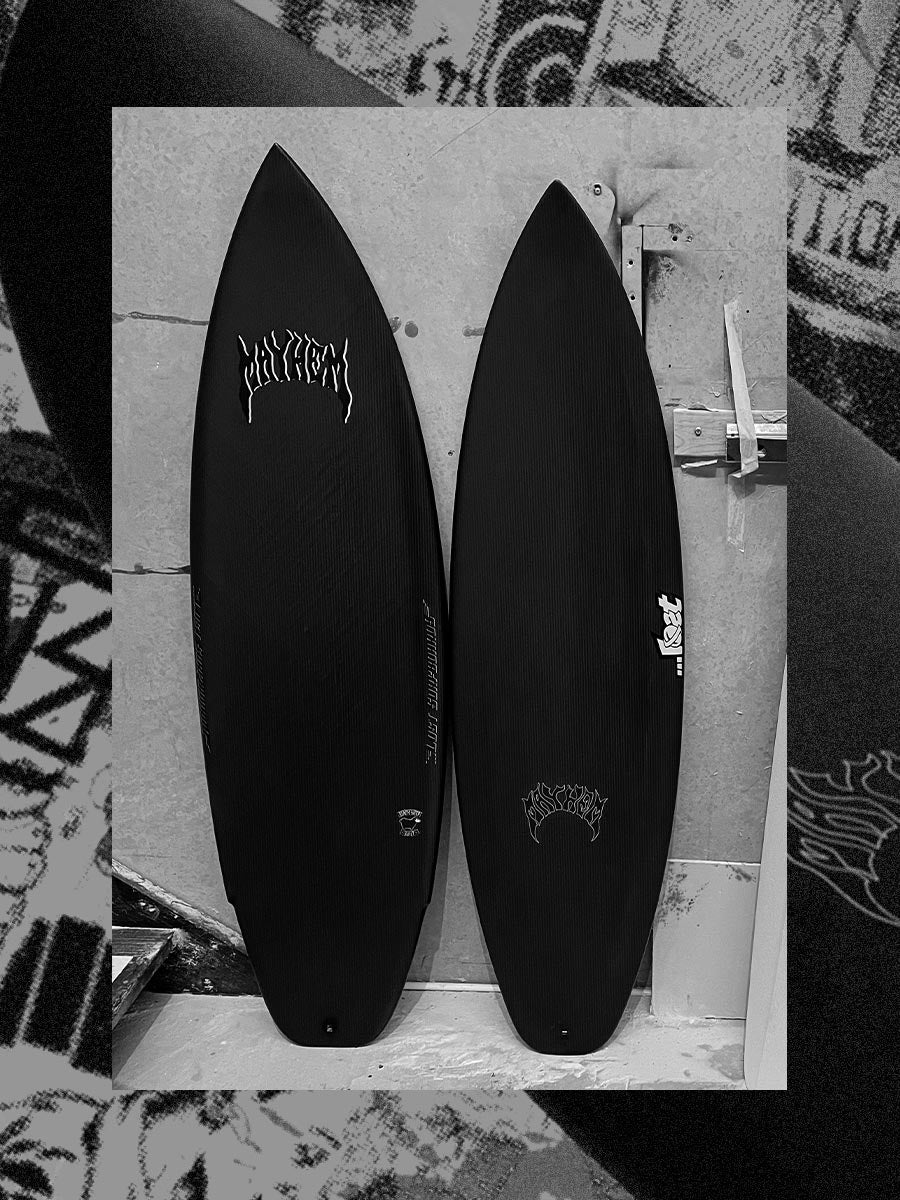
The RNF TWINZER ‘96er
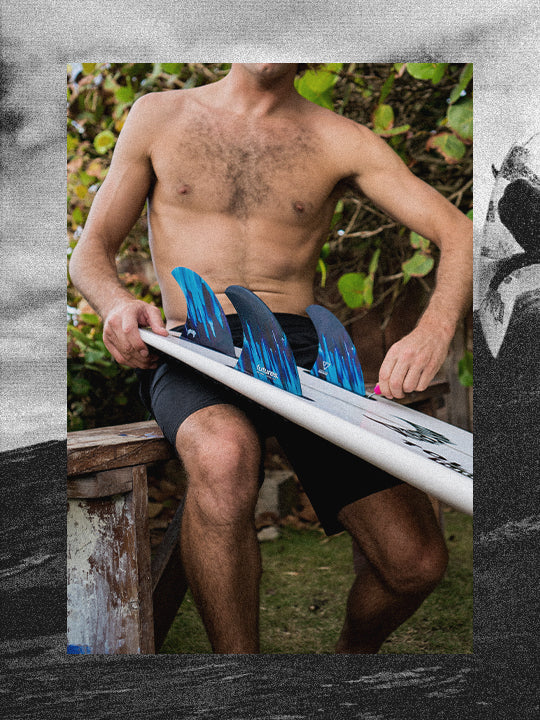
The latest incarnation of our definitive fish design, the RNF-’96 enhanced with our TWINZER+ fin cluster.
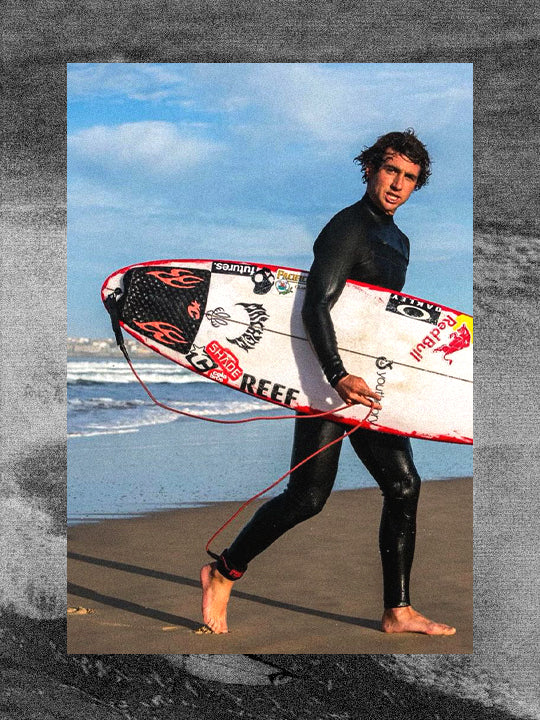
Based off the RNF-’96, a 2021 re-vamped version of our original 5’5” Round Nose Fish (developed 30 years ago), it’s been our best-selling board of the past five years and arguably the best-selling “fish” model of all time. The TWINZER ‘96er combines all the proven performance design details of the RNF-’96 with the added grip, control, and drive of the TWINZER+ fin cluster.
All are descendants of the original hand-shaped boards, first ridden by teenaged Chris Ward and Cory Lopez 30 years ago and documented in the seminal surf flick 5’5” x 19 1/4—together making an indelible mark on the surfing universe.
The Roots of the TWINZER+
The impetus for the TWINZER+ has been building for over 25 years.
It goes back to 1999 and the Rusty Surfboards “C5 Challenge”—a surfing/shaper competition at our home break, Lower Trestles. Rusty had been creating and selling his own take on the Twinzer, using small canard fins strategically positioned on tri-fin/thruster boards. Thus the namesake “C-5,” because of the five-fin setup.
The C5 Challenge invited shapers and surfers to enter as teams, and “challenged” us to build boards using Rusty’s formula: five fins, with the forward Twinzer-esque canards being the unique element. We entered with Dino Andino and Shea Lopez on boards I shaped following Rusty’s C5 fin cluster. Dino made the final and finished as runner-up (to Jay Larson/Doc Surfboards). It was close, but we felt good about the boards we built and the performance.
A year later, in 2000, the event moved to Rusty’s home break, Blacks Beach in San Diego. We entered again—this time with Dean Randazzo. Dean ended up taking the win (and a $10,000 check for each of us) on our five-fin canard “Twinzer” version of Rusty’s C-5 design.
We were stoked and intrigued, but Rusty had developed and owned the concept, so we didn’t pursue it further. Even with competitive success, I never really thought of adding it to our fish designs… for nearly 20 years.
Fast Forward 20 Years
During the early Covid chaos of summer 2020, while trolling IG, I followed the feed of longtime Rusty Surfboards production shaper Stu Kenson. I couldn’t help but be enamored with the relentless run of boards he was building with Twinzer setups.
Intrigued again, I reached out to Stu and expressed interest in developing one of my own.
I wanted to track down Will Jobson—the man universally acknowledged as the inventor of the Twinzer concept—to use his exact specs and officially license it from him. I wanted to do it right, with authenticity. Give credit to the inventor and toss him some money for his idea.
With Stu and others trying to help, we attempted to reach Will, but never got a response. Once again, I lost interest and moved on.
In the five years since, we’ve seen a lot of creative smaller-scale builders developing Twinzer boards. Beautiful backyard and boutique boards popping up all over IG. Even some excellent surfing being done on them. The development of the Twinzer concept has been building back up from the underground. Once again, my curiosity was piqued.
Why the RNF ’96?
Where to start? With the safest bet - the most tried, tested, and proven alternative design in our line: the RNF-’96.
With 30 years of R&D under our belt (and thousands made), adding an alternative fin setup to the ’96 seemed fun and exciting. By pairing the Twinzer+ canard setup with our most reproduced, well-ridden, and beloved model, we could eliminate hesitance or apprehension. Surfers already know the board works.
By leaving the overall shape/design of the ’96 unchanged, it gave us a transparent base to feel the Twinzer+ concept underfoot, without wondering if the shape itself was unfamiliar.
Using decades-old fin placements, published by Jobson himself, we began building the first RNF TWINZER ‘96er—subtly adjusting shape along the way:
• Added just a touch more width to the hip of the tail to hold the added outside canard fins, balanced by widening the nose at the same point. Nose and tail now maintain the same width at 12” from tips.
• Deepened the double concave through the tail and made slight updates to the tail and overall foil of the deck-line.
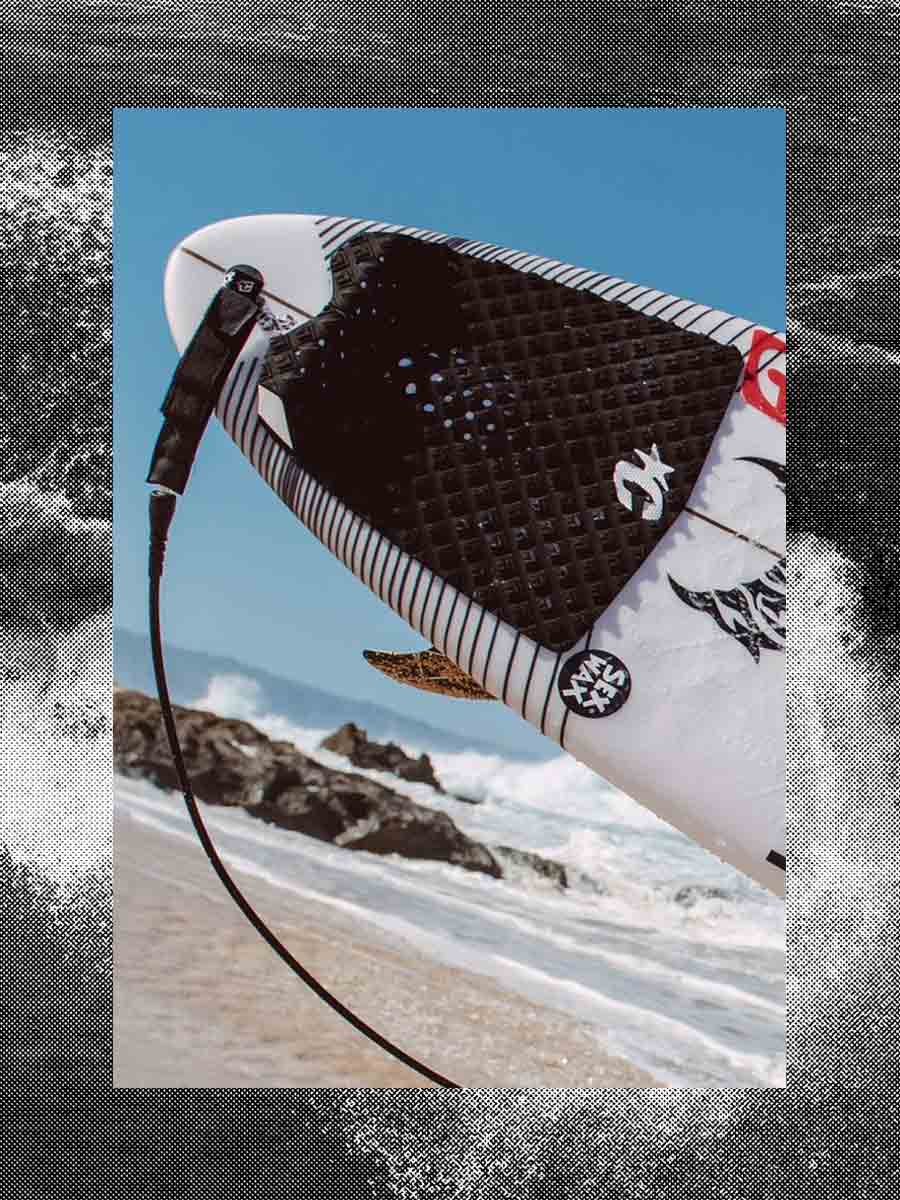
Taking a page from Rusty’s C5 playbook, we added a third mini-box in the rear stabilizer position, offering a myriad of fin setups. Many Twinzer shapers have used channels in the tail to help with hold in radical surf. We went another way. Thus, the TWINZER+.
The rear box only holds a specifically made mini-trailer fin that matches the Twinzer canards - no tossing in full-sized thruster fins or random trailers.
Options and Versatility
The board is designed to work beautifully as a traditional Twinzer: two standard twin fins with two forward canards. But the added fifth box opens up lots of possibilities:
• Tiny waves, total freedom: Run it as a pure twin, or Twin + mini-rear trailer.
• Loving the Twinzer, but bigger/critical waves: Add the mini-trailer with the Twinzer+ setup for added grip, power, and hold.
With just two standard-sized boxes and three smaller mini-boxes, the tail stays light, lively, and flexible—finished with a clean extra glass patch over the fin area.
Our RNF has always been about performance, not just in small surf but in all conditions. From the earliest hand-shaped beginnings to countless incarnations, the RNF—and now the TWINZER ‘96er—is not just a crutch to go fast in weak waves. It’s a true high-performance tool.
Twinzer Basics (For the Unfamiliar)
A Twinzer fin setup works by using a small “canard” fin placed ahead of a larger main fin on each side. The canard conditions the water flow, creating a more efficient and controlled version of a twin.
• Reduces cavitation/drag: Canards smooth turbulent water flow, keeping the main fin engaged and reducing slide-outs.
• Increases efficiency: Similar to how a jib sail directs wind over a mainsail.
• Enhances projection and drive: More “gears under the gas pedal” compared to a standard twin.
• Allows smaller fins: Less total fin area needed = tighter pivot, still with drive.
The rider’s experience:
• Speed of a twin, with more control.
• Less spin-out, more confidence in turns.
• Ability to release for driftier feel.
• Fluidity and momentum through flat sections.